
The context layer tax firms run on
Everything on a client, in one click.
TaxWeave holds everything your firm knows about a client, and puts skills to work on top of it. Your clients’ identifying details never reach an AI model.
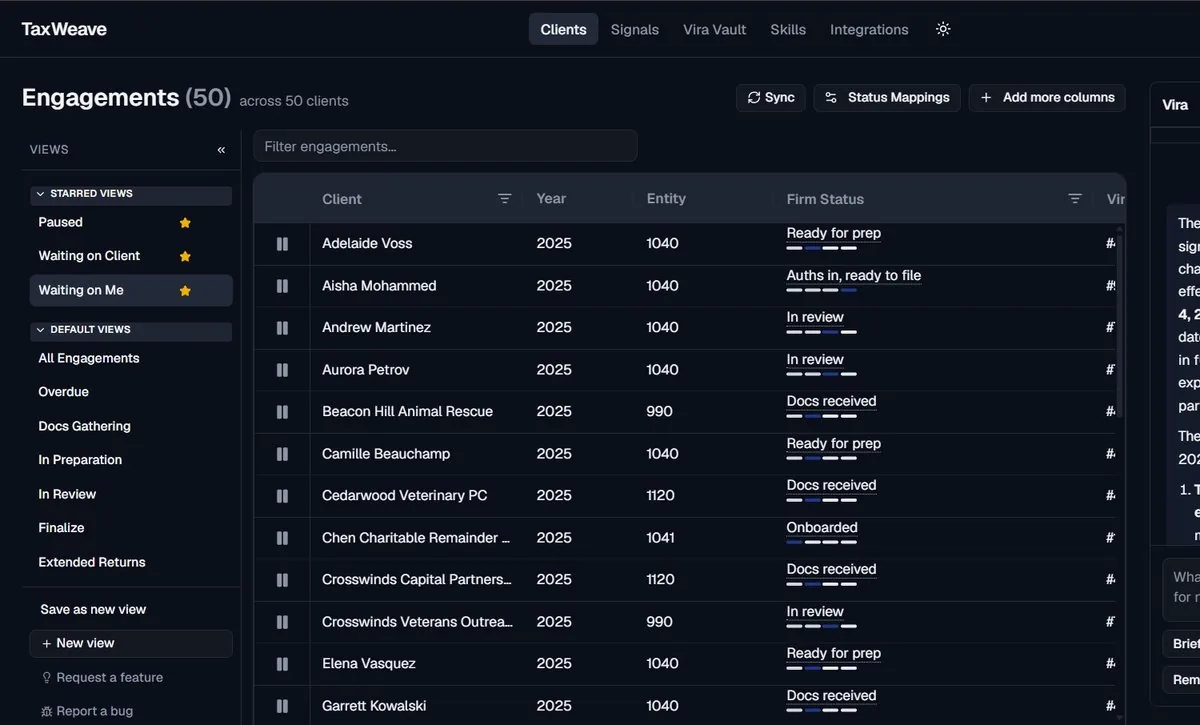
The context layer tax firms run on
TaxWeave holds everything your firm knows about a client, and puts skills to work on top of it. Your clients’ identifying details never reach an AI model.
Built and used every day inside an award-winning tax practice — by the CPA who built it.
2026 Best Firm for Technology Accounting TodayThe product
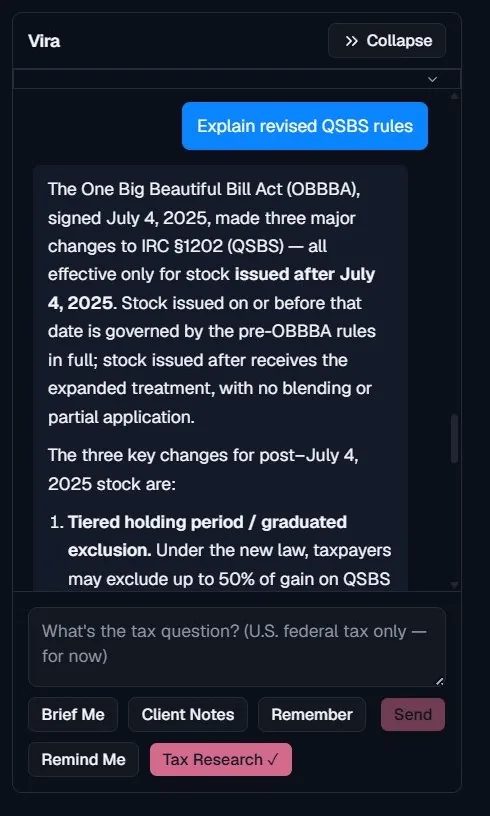
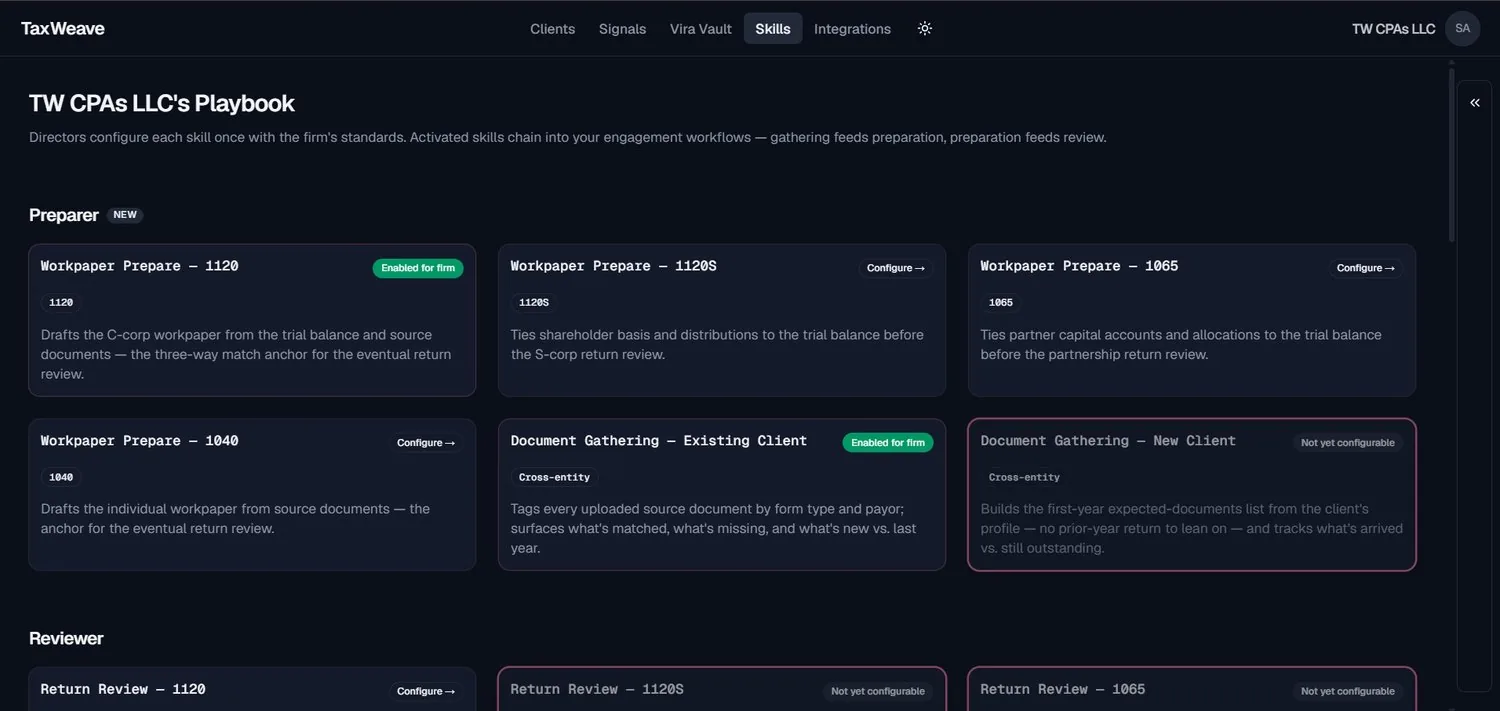
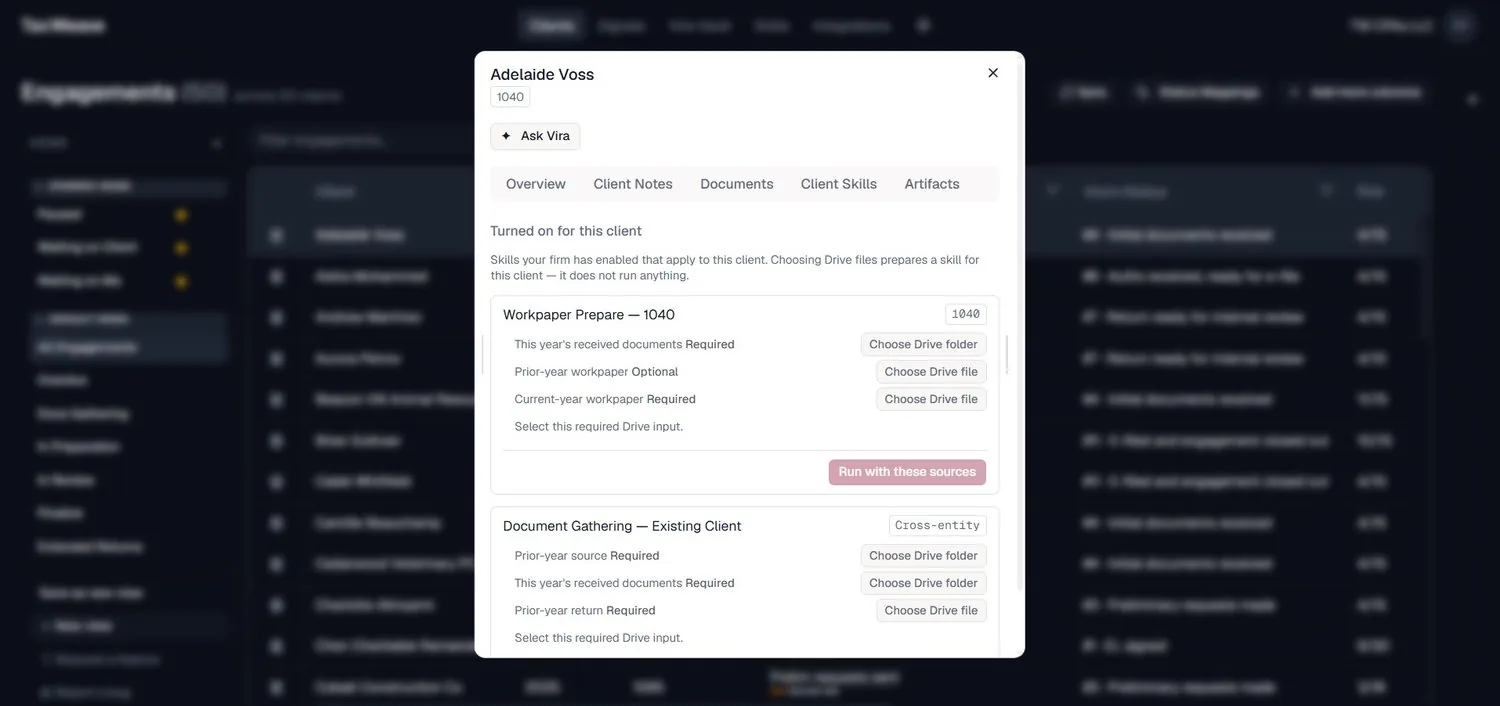
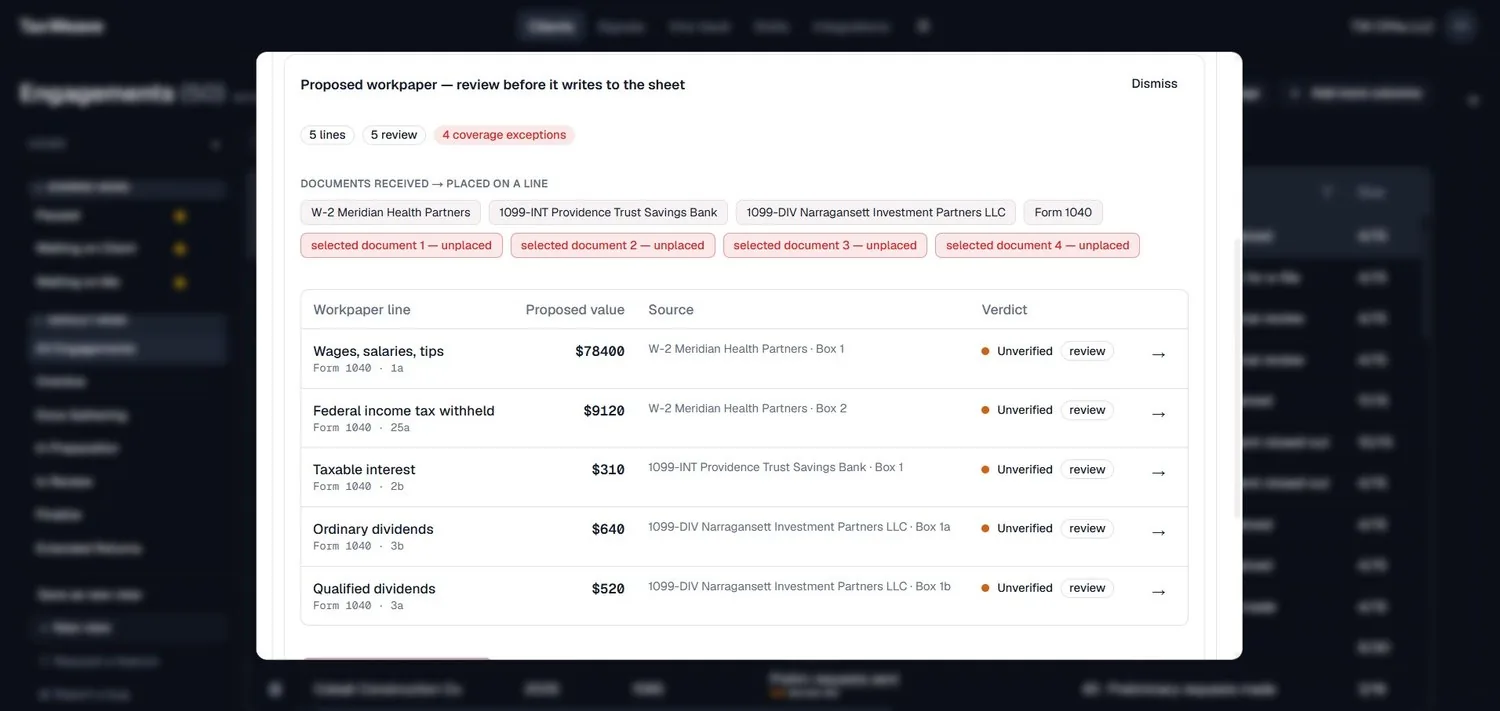
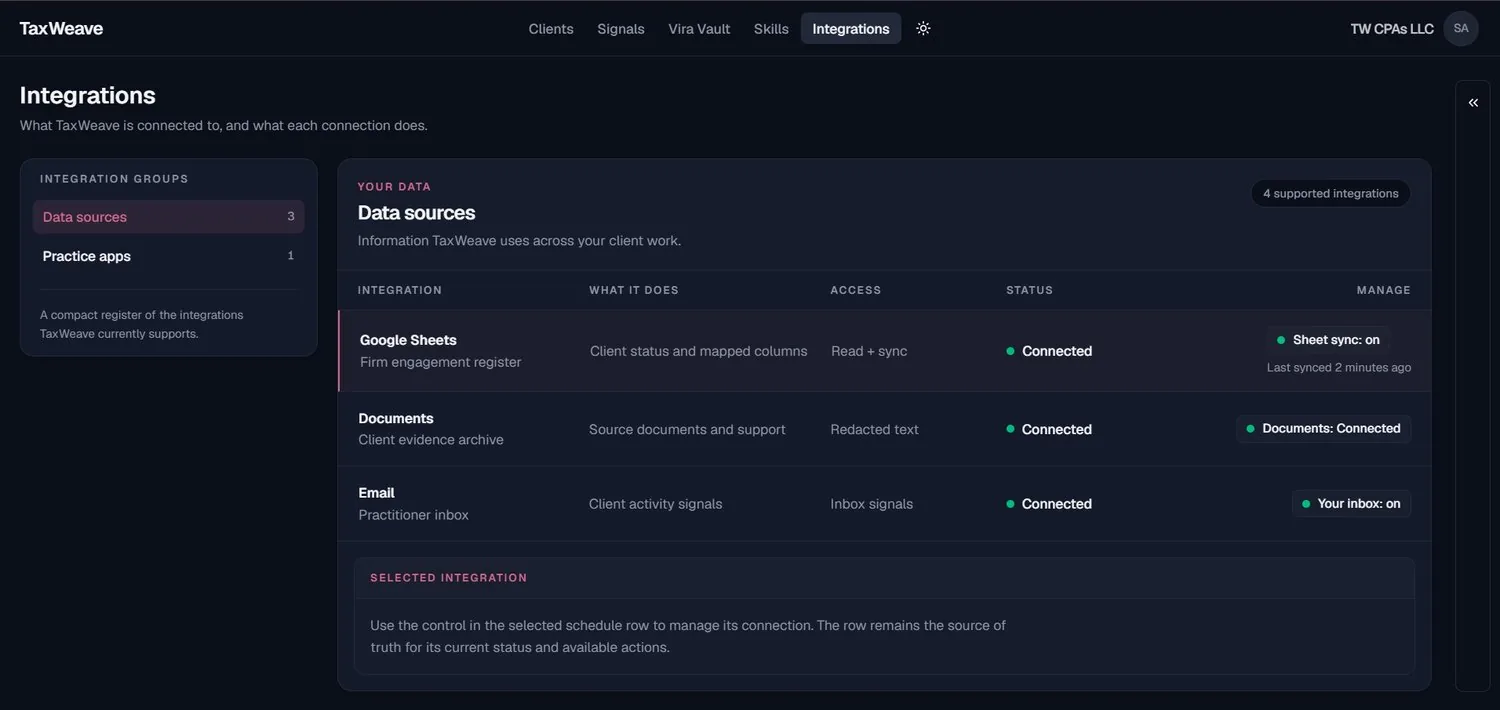
Vira is the assistant reading all of it. Open any line to see the screen it runs on.
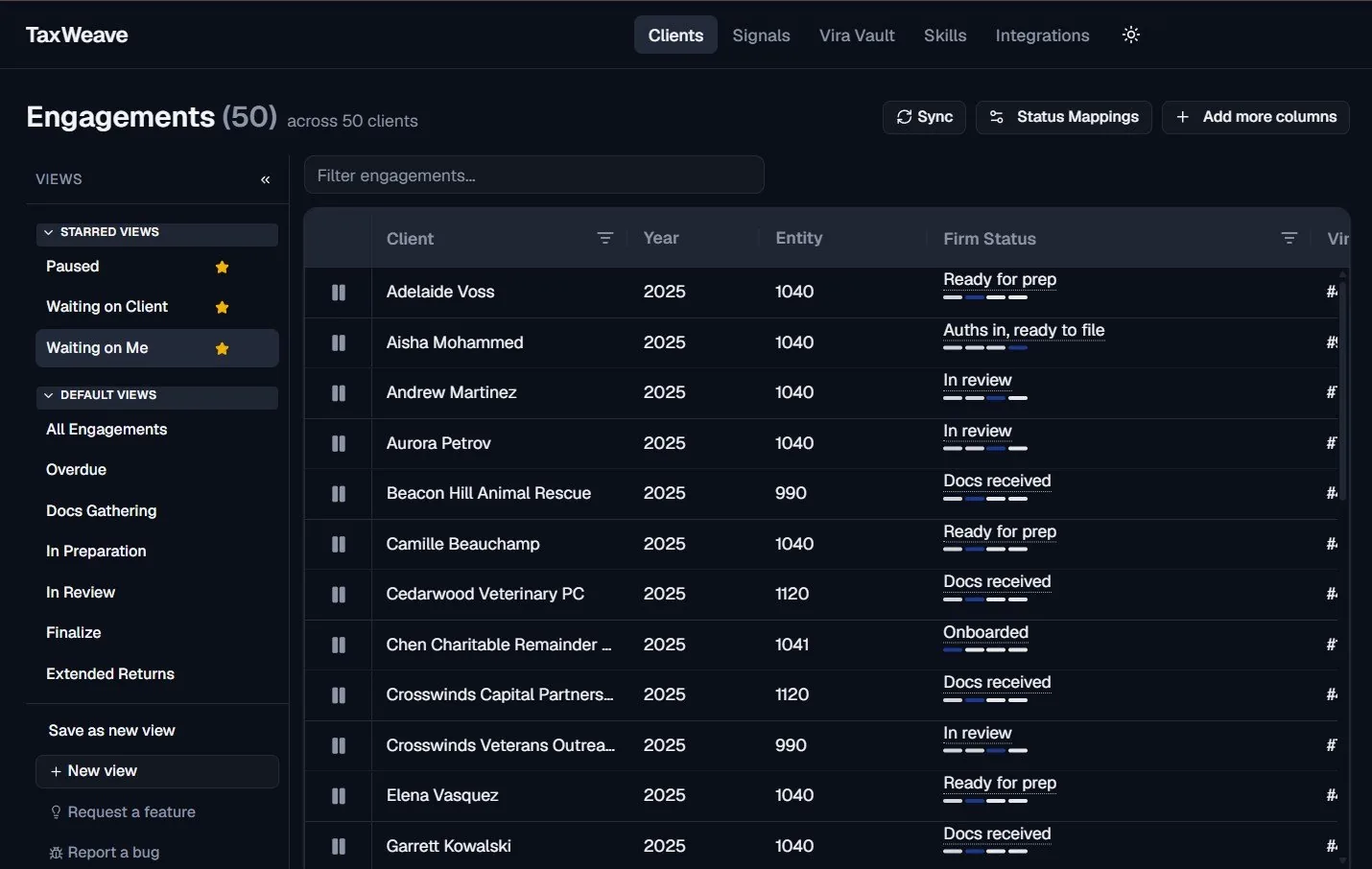
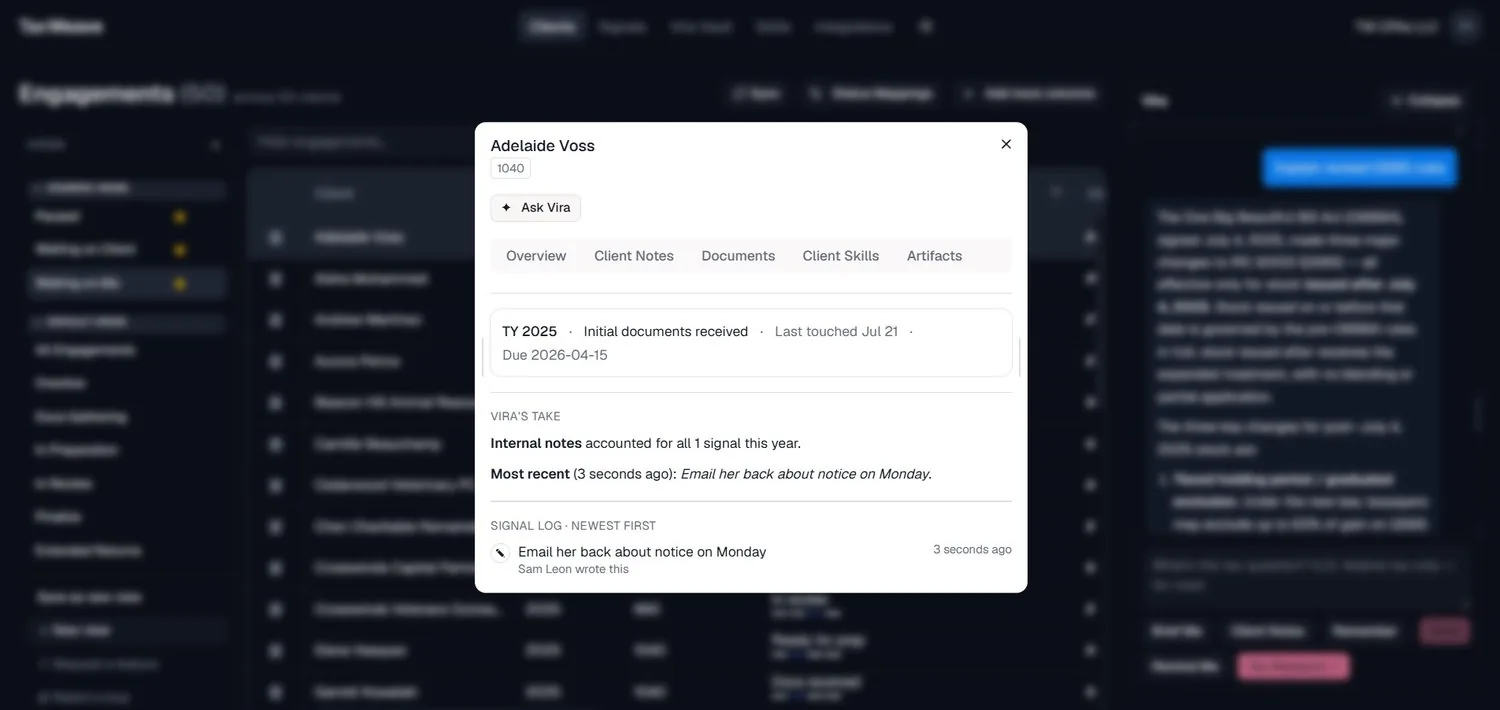
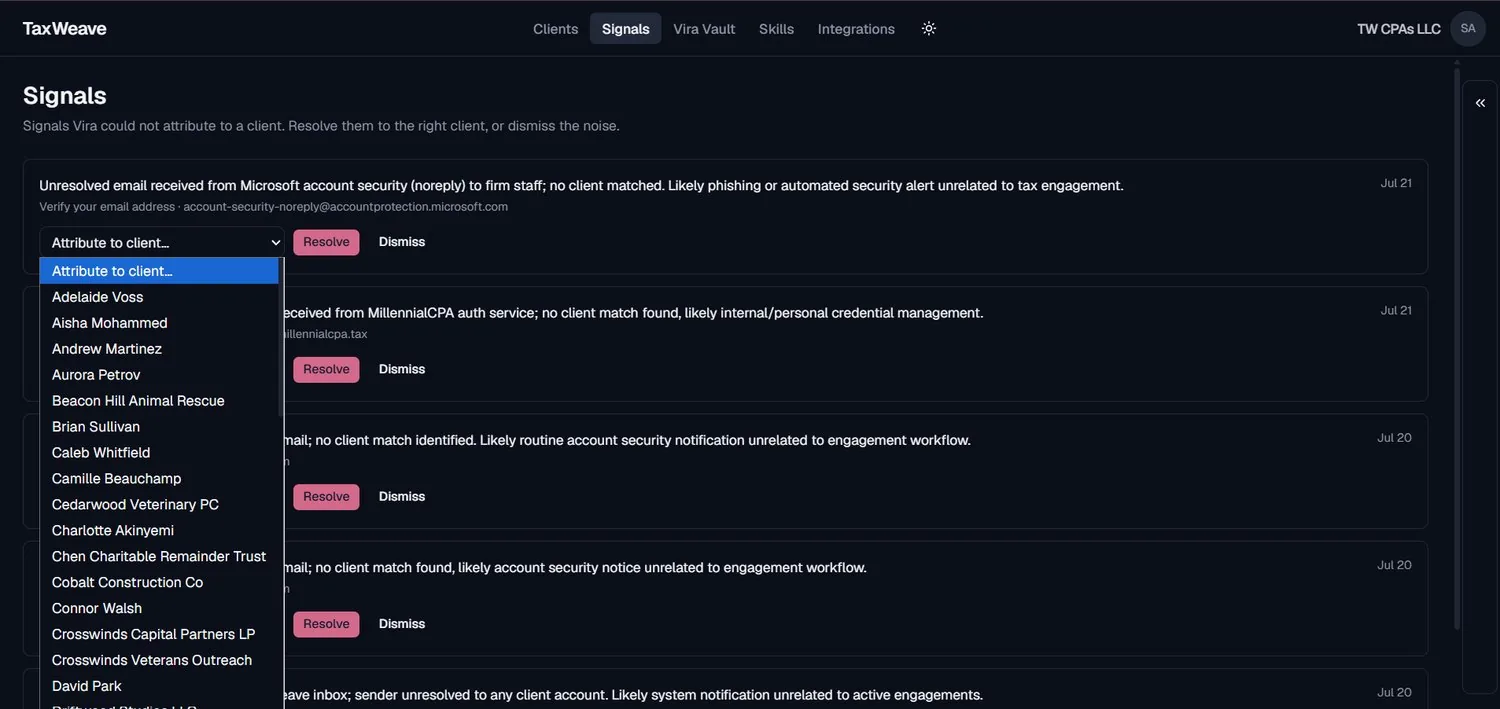
I would pay top dollar for that just itself. Forget about every other feature.
This just looks so amazing. I’m sure this would add in value for us.
This is super impressive. It’s really cool.
I love the name TaxWeave. It actually is representative of what the software is doing.
How it works
A skill that doesn't know the client makes you re-supply the context every time — and re-supplying the context is most of the work.
Point TaxWeave at the firm's email, documents, and engagement register. Nothing for staff to install.
Messages, documents, and deadlines land against the right client. Whatever can’t be matched comes to you.
Work that has gone quiet shows up before the client is the one to mention it.
Skills read the full client and propose work. A reviewer approves before anything is written.
Security
§7216 doesn’t ask what a vendor does with your client’s information. It asks whether you were allowed to send it at all.
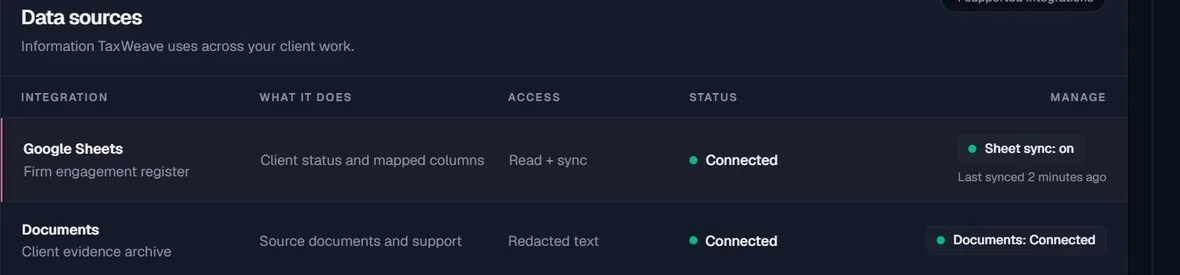
The access level on Documents reads redacted text. That’s the whole design, visible in the product.
Our commitment
You carry a duty to your clients that doesn’t lapse. We elected this status so the software carries one too. Our charter reads: to advance the confidentiality, integrity, and responsible handling of taxpayer information.
The result is simple. As long as TaxWeave is around, what happens to your clients’ information is never an open question.
Press
Most people building tax software have never filed a return. That’s where insight gets missed.
Listen
Blake Oliver and David Leary on turning client documents into work papers, why review is still the bottleneck, and what a firm can realistically automate today.
Open on accounting.show ↗Read
Read

Early access
Opening to a few firms at a time.
Questions
The assistant built into TaxWeave. She reads each client's history as it accumulates, so she can tell you where an engagement stands — and she answers federal tax questions in the same pane you're already working in.
Almost nothing changes. TaxWeave reads the tools you already use — email, documents, and your engagement register — so there's nothing for staff to log. The one thing it does ask: anything it can't attribute to a client lands in a queue for someone to resolve or dismiss.
It can if you want, but it’s not necessary to rip out what you have if it’s working. TaxWeave is an additional connective layer. Features like a secure portal and client drives are coming soon, which will eventually allow a full replacement if desired.
It prepares the work that surrounds the return — work papers, document gathering, review — and hands off to the tax software your firm already files with. Those skills are shipping one at a time, with the core skills family — document gathering, work paper prep, and review — slated to land before tax season in 2027.
Identifiers — SSNs, EINs, ITINs, bank and routing numbers, W-2 control numbers — are found and swapped for placeholders in code before anything reaches a model. Names and other details buried in ordinary sentences are harder to catch cleanly, so every request is checked one last time on the way out, and if an identifier is still in there it doesn't go. Real values are restored only inside TaxWeave.
Our own audit is underway. In the meantime TaxWeave runs on SOC 2 certified infrastructure — the services that store and process client data are audited to that standard, and the architecture above is what keeps identifiers out of the model layer regardless.
Work paper preparation and review are built around 1040, 1065, 1120 and 1120S. Skills ship one at a time — the list in the playbook shows what's configurable today.
Per client, per month — $5 for your first 200, $4 from 201 to 1,000, $3 above that, with a $99 monthly minimum. No seats, so you can scale efficiently. Priced to be cheaper and faster than adding another part-time contractor.
Firms whose client context has outgrown one person's head. Lean multi-person firms scaling without hiring, and solos pushing past the ceiling of what one person can hold.